
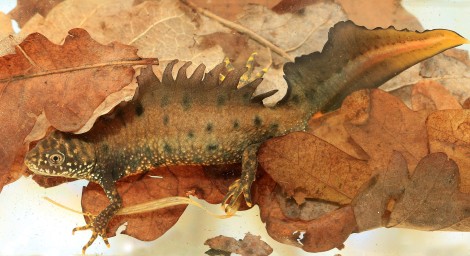
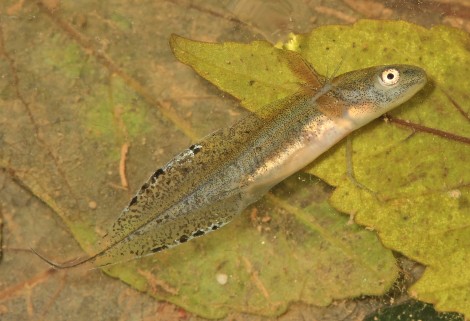
Great crested newts Triturus cristatus are a European Protected Species and one of the UK’s most strictly safeguarded amphibians. Any development with the potential to affect ponds, wetlands, grassland, woodland, or terrestrial refuges must consider their presence. At Wold Ecology, we deliver robust, fully compliant great crested newt surveys that support responsible development while ensuring this species of conservation significance is protected.
Our GCN survey work follows Natural England and CIEEM best-practice guidance, using a combination of field-based and laboratory techniques.
1. Habitat Suitability Assessment (HSA)
We begin by assessing ponds and surrounding terrestrial habitats using the Habitat Suitability Index (HSI) to determine the likelihood of Great Crested Newt presence. This informs whether further survey effort is required.
2. Environmental DNA (eDNA) Testing
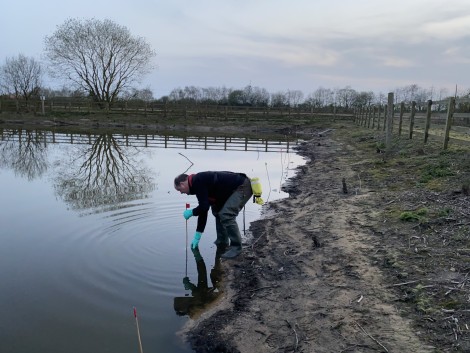
Between mid-April and late June, we can take water samples to detect genetic material left by GCN.
Provides a rapid, cost-effective confirmation of presence/likely absence
Analysed by accredited laboratories
If eDNA returns a positive result, or if the habitat risk is high, more detailed surveys are required.
3. Traditional Population Surveys
Where needed, we undertake up to six survey visits using recognised methods:
Torchlight surveys
Bottle trapping
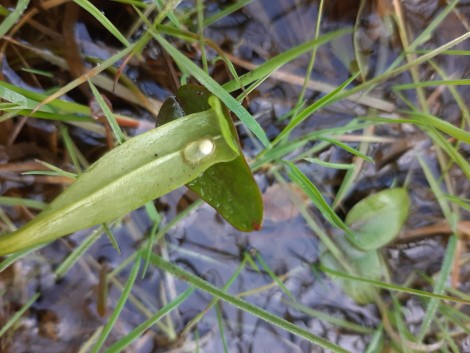
Egg searches
Netting
These determine population size class, distribution, and breeding activity, ensuring a complete understanding of how newts use the site.
4. Reporting, Licensing & Mitigation
Our final report provides clear, actionable advice on impacts, licensing needs, and mitigation. Where a development may affect GCN or their habitats, we support applications for:
Natural England mitigation licences
District Level Licensing (DLL), where available
Site-specific strategies to avoid harm and maintain ecological integrity
With the right approach, development can progress while safeguarding great crested newt populations. Wold Ecology specialises in designing practical, legally compliant solutions that meet both planning requirements and ecological best practice.
Common mitigation & integration measures include:
Retaining ponds, waterbodies, and associated terrestrial habitat
Creating new breeding ponds or enhancing existing ones
Installing amphibian-friendly fencing, hibernacula, and terrestrial refuges
Timing works to avoid sensitive seasons
Designing habitat corridors to maintain connectivity across the landscape
Using District Level Licensing to streamline projects while achieving strategic conservation benefits
Our goal is to provide clear guidance, minimise delays, and ensure that Great Crested Newt conservation and development objectives are fully aligned.