
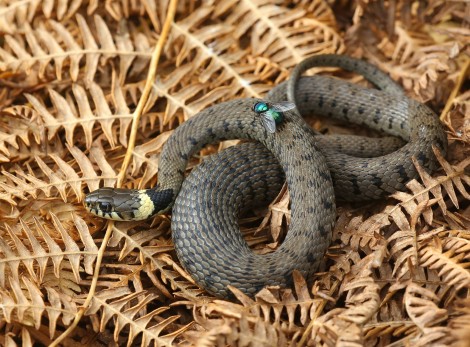
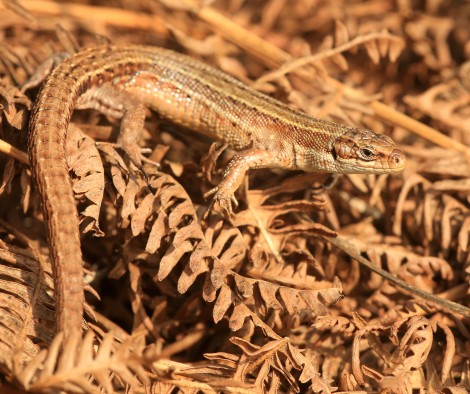
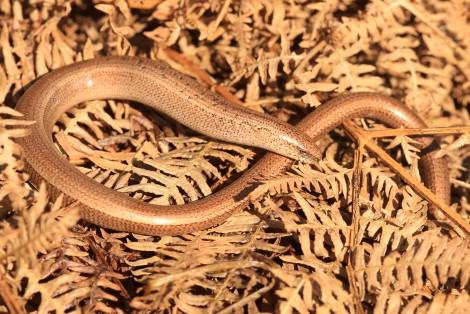
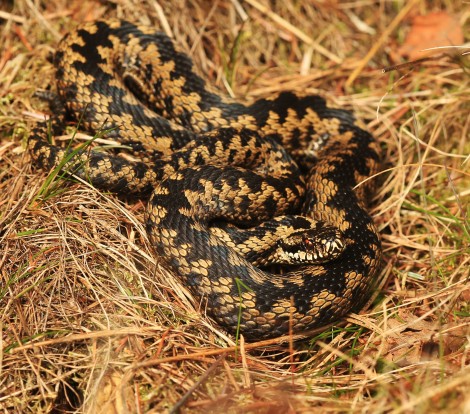
Reptiles are an important component of the UK’s natural ecosystems, and several species, including grass snakes, slow worms, common lizards, and adders, receive legal protection. Any development involving grassland, heathland, brownfield sites, scrub, woodland edges, or wetland margins must consider their presence. At Wold Ecology, we provide comprehensive reptile surveys that ensure legal compliance while enabling projects to progress smoothly.
How Reptile Surveys Are Carried Out
Our survey process follows current CIEEM guidelines and is designed to deliver accurate, defensible results.
1. Preliminary Habitat Assessment
We begin with a site walkover to identify features likely to support reptiles, including:
This stage determines whether a full reptile survey is required.
2. Artificial Refuge Surveys
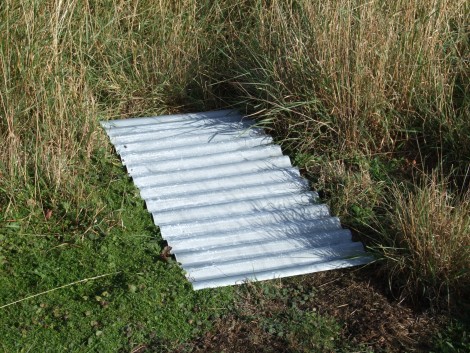
Where suitable habitat is present, we place a series of carefully positioned artificial refuges (typically roofing-felt mats or tins) across the site.
Ecologists record presence, abundance, age classes, and distribution across the site.
3. Direct Observation & Targeted Searches
Alongside refuge checks, we conduct visual transects to identify reptiles using natural basking sites. This helps confirm population size and key activity areas.
4. Reporting & Mitigation Planning
Our results are compiled into a clear, actionable report detailing:
Integrating Reptiles & Development
Sensitive planning allows construction and reptile conservation to work side by side. Wold Ecology specialises in delivering practical solutions that minimise impacts while supporting ecological value.
Typical mitigation and integration measures include:
Our approach ensures full compliance with wildlife legislation while providing developers with clear, reliable pathways through the planning process.